

Taming the Beast: When Umbria Meets Puglia
A Blend Without a Blueprint
When you look up an Italian blend, a few of the same bottles will come up. You might find a Super Tuscan, you might even find a Chianti. When we had set out to make an Italian blend of our own we encountered an unforeseen problem naming our blend, truly we could’ve named it anything, but why not the already established blends, Chianti, Super Tuscan, etc. If we tried this it simply wouldn’t work, the thing about these names that you see is that they often come from “old world” Europe where their system of naming things is very tied to place. Often you’ll see the name of the wine on the bottle as just the region it came from, and even still that region could grow 1, 3, or 18 grapes, good luck guessing what’s in that bottle. Not to harp on the old ways too much, but our esteemed Italian blends also fall within these confines. Chianti or Super Tuscan describes a blend of a specific region.

Taking two grapes from different Italian regions, Sagrantino and Primitivo, lands us squarely outside of those parameters. And our grapes aren’t grown in Italy, but right here in the Columbia Valley. Maybe the oddity of all Italian oddity blends.
Their traditional Italian identities barely intersect. Sagrantino looks toward Montefalco in Umbria; Primitivo toward Puglia. There is no famous old regional blend waiting for us to cop, really the only thing they have in common is that they’re from Italy.
Sagrantino and Primitivo tasted good together. Simple enough. Naming a Columbia Valley blend of grapes traditionally associated with two completely different parts of Italy turned out to be the harder question.
And so the Super Italian… beating out competition like the Super Washington Italian or the Super Italian Washington, neither really rolled off the tongue as well as we’d hoped.
Taming the beast
The majority grape, Sagrantino, is a unique grape that boasts a large tannin profile. Balanced out with acidity, it has immense aging potential as those tannins preserve so much nuance throughout the years. This kind of power is obvious, and for some may be too much as a young wine. The only option must be to wait for it to be ready in a few years or get my most intimidating decanter. These are all valid methods but here’s where we can pitch in.
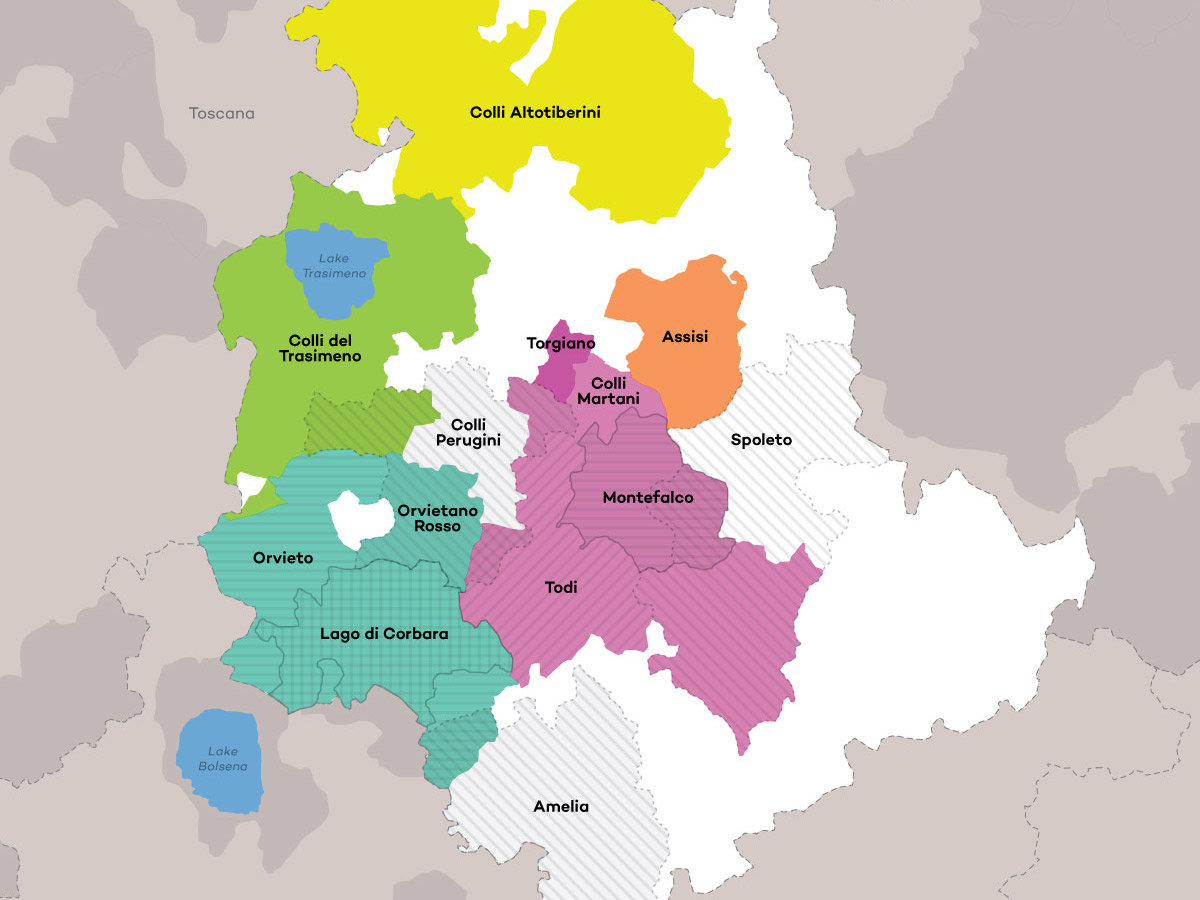
Umbria Wine Region
Blending a tannic wine with a less tannic wine can help with some of this age-ability profile while adding nuance from another grape. Hitting two birds with one stone here, we make the tannic Sagrantino more approachable now, while adding nuance with another wine to create a kind of blend the world has yet to see.
The percentages aren't necessarily fixed from vintage to vintage. The question is simpler: when the wine is released, is it ready to drink? Sagrantino still needs to supply the tannin and acidity Bart sees as the backbone of an age worthy wine, but there also has to be enough fruit around that structure to make the bottle compelling now.
“This abundance of structure gives the wine longevity and an unmistakable presence. Its tannin often feels less like a brief roughness and more like a coating that builds across the gums, tongue, and cheeks. In a young or heavily extracted Sagrantino, that sensation can continue long after the last sip. This does not mean Sagrantino is destined to be harsh…”
Read about the rest of this tannin profile.
Enter Primitivo
Blending this wine with Primitivo gives this blend continued depth, fresher acidity, and a smoother finish. Along with bolstering Sagrantino’s structure, it adds in berry notes like dark cherry and raspberry along with earthy undertones. This is not merely dialing the tannin knob back, if that were all we wanted, the blend wouldn't be particularly interesting. It brings enough fruit and palate weight to make all that structure read differently, creating a wine that isn't simply a diluted Sagrantino or a firmer Primitivo. Primitivo adds the kind of complexity that makes you want to pop the cork sooner.

That's part of what makes blending interesting. The individual wines may each be compelling on their own; the question isn't necessarily whether the blend is “better,” but whether putting them together creates something neither can do independently.
Sagrantino's traditional home is Montefalco in Umbria. Primitivo's Italian identity is rooted much farther south in Puglia. In Italy, place helped write the traditions surrounding both grapes. Here, Columbia Valley tells us where they were grown, not what tradition says we have to do with them. As Bart puts it, “In Washington wine, tradition can mean a lot, or nothing. It's up to the winemaker and the grower.”
Nothing Extra Needed
This dynamic alone was too good. It would be easy to overdo it with extra oak elements. But we'd already found the balance we wanted between Sagrantino's structure and Primitivo's fruit. New oak could have brought another layer of tannin, toast and spice, but that wasn't a layer we thought the wine needed.
“Oak is analogous to salt and pepper on food. This wine doesn’t need anything added to help bring it to life.” - Bart
Tradition, Rewritten
The Super Italian isn't an attempt to recreate an Italian wine in Washington. If anything, it takes advantage of the fact that we don't have to. Sagrantino and Primitivo arrived here with centuries of history behind them, but none of the regional boundaries that traditionally kept them apart.
That gives us room to ask a much simpler question: what happens if they just taste really good together?
Sagrantino still gets to be Sagrantino. The tannin and acidity that make it such a formidable, ageworthy grape haven't disappeared. Primitivo simply gives all that structure something else to work with: more fruit, more weight, and a reason to open the bottle sooner rather than later.
Maybe that's the most Washington thing about the Super Italian. We can respect where these grapes came from without being obligated to recreate what has already been done with them.


